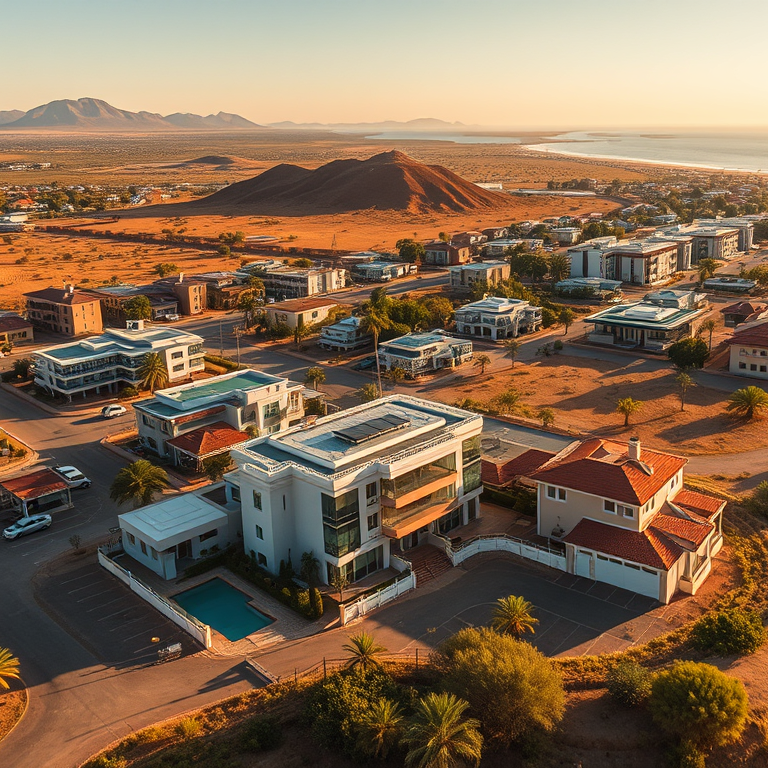
Namibia stands out in Southern Africa for its economic stability, strong currency peg, and thriving tourism sector. Its real estate market is relatively expensive compared to peers, with the average house price exceeding N$1.3 million in 2024. Urbanisation is high for the region (≈54%), concentrated in cities like Windhoek and coastal hubs such as Swakopmund and Walvis Bay. While many Namibians own homes (≈68.8% owner-occupancy based on earlier data), new buyers face affordability challenges due to high prices and the need for large mortgage deposits. Tourism drives demand for short-term rentals and luxury lodges, yet property investment is often reserved for wealthy individuals and foreign buyers.
Namibia uses the Namibian dollar (NAD), pegged 1:1 with the South African rand, creating low inflation and currency stability. While remittances are small (≈0.5% of GDP), foreign investment interest is steady, especially from South Africa and Europe. This makes Namibia ideal for tokenisation models aimed at investment access and tourism property monetisation, rather than basic housing affordability.
Digital adoption is moderate: about 53% of Namibians use the internet (≈1.37M people) and mobile penetration exceeds 108% (≈2.8M SIMs). Mobile banking products like FNB eWallet and MTC Mobile are widely used. However, Namibia has a strict crypto regulatory environment: the Bank of Namibia bans unlicensed cryptocurrency payments, and the Virtual Assets Act (2023) sets new rules for digital tokens and virtual asset service providers. Any SQMU or SQMU-R platform must be carefully structured to comply — for example, using licensed intermediaries to instantly convert stablecoins into NAD or operating on a permissioned blockchain regulated by local authorities.
How SQMU and SQMU-R Work
- SQMU: Each token represents one square metre of property, enabling fractional ownership of real estate without full upfront purchase.
- SQMU-R: A token representing a rental contract or stay right, formalising leases and automating payments (ideal for tourism bookings and shared ownership models).
In Namibia, these tools can attract international capital, broaden access to high-end real estate, and digitise rentals in tourism hubs.
Use Cases for Tenants and Guests
While local long-term rentals are limited compared to homeownership, SQMU-R can enhance rental and hospitality experiences:
- Secure bookings: Tourists can reserve hotel rooms, villas, or campsite pitches with SQMU-R tokens representing nights or square metres.
- Stable payments: Visitors can pay in stablecoins or digital NAD, avoiding currency conversion hassles.
- Flexible co-living: Urban renters could lease portions of large homes by the square metre with secure contracts.
Example: A German tourist books a week in a Swakopmund guesthouse via a SQMU-R token. Payment is made in a euro-pegged stablecoin, converted instantly into NAD for the host. Both guest and owner have a secure on-chain booking record.
Use Cases for Landlords and Developers
Namibia’s high property prices and limited mortgage access make tokenisation attractive for funding and expansion:
- Fractional luxury investment: A Windhoek apartment developer can issue SQMU tokens, allowing small investors or foreigners to buy shares of prime real estate.
- Tourism property funding: Lodge operators near Etosha or Sossusvlei can raise capital by selling SQMU tokens in their resorts to international investors.
- Prepaid stays: Hotels and safari camps can issue SQMU-R tokens representing future room nights, generating early cashflow.
- Shared urban housing: Large homes in Windhoek could be partially tokenised to allow co-ownership or shared rental models.
Example: A Swakopmund beachfront developer issues 10,000 SQMU tokens for a luxury villa complex. South African and European investors buy tokens in USD or EUR stablecoins, which are converted into NAD under local regulations. Later, the villas’ rental nights are tokenised via SQMU-R for tourists, with profits distributed back to token holders.
Use Cases for Agents and Platforms
Namibia’s property professionals can extend their reach globally with tokenisation:
- International marketing: Agents can list SQMU-backed properties on global crypto real estate platforms.
- Verified property data: Titles, permits, and developer credentials can be attached to SQMU tokens, increasing buyer confidence.
- Tourism booking platforms: Proptech startups can use SQMU-R to sell nights or stays directly to digital wallets.
- Portfolio creation: Agencies can bundle safari lodges, guesthouses, and apartments into tokenised investment products.
Example: A Windhoek real estate agency partners with a fintech to launch an app showcasing tokenised tourism lodges. Investors in Europe and South Africa can purchase SQMU shares and receive SQMU-R rental payouts when guests book stays.
Use Cases for Investors
Namibia’s property market is attractive but capital-intensive. SQMU makes it accessible:
- Fractional entry: Buy a few square metres of luxury coastal or safari properties without a full mortgage.
- Tourism-backed yields: Earn rental income from tokenised lodges and hotels via SQMU-R payouts.
- Stable currency: NAD’s rand peg lowers inflation risk; foreign investors can still pay in stablecoins to hedge USD/ZAR movements.
- Liquidity: Trade tokens to exit investments without full property sales.
Example: A South African entrepreneur invests $10,000 into a tokenised Windhoek apartment development. Rent is collected via SQMU-R and paid back quarterly in NAD, while tokens remain tradeable if he wishes to exit early.
Why Namibia Is Ready for SQMU and SQMU-R
- Stable economy and currency: The NAD’s peg to the rand provides confidence for token pricing and payouts.
- Tourism-driven demand: Safari lodges, resorts, and luxury coastal rentals create clear token use cases.
- Digital finance adoption: Mobile banking is widespread, and fintech innovation is supported.
- Regulatory clarity emerging: The Virtual Assets Act (2023) offers a legal framework for compliant tokenisation.
- High property prices: Fractional models appeal to both locals and foreigners who can’t afford full properties.
Challenges and Solutions
- Strict crypto controls: Operate within the Virtual Assets Act and partner with licensed local fintechs to handle stablecoin conversion.
- Moderate internet access: Build lightweight, mobile-first platforms that work in lower-connectivity areas.
- Education: Provide clear explanations for token ownership in English, Afrikaans, and Oshiwambo.
- Niche focus: Start with luxury and tourism properties to prove value before expanding to broader housing.
Looking Ahead
Namibia’s combination of economic stability, tourism appeal, and growing fintech regulation makes it an ideal testing ground for real estate tokenisation. SQMU can democratise access to high-value vacation and urban properties, while SQMU-R can transform tourism bookings into secure, tradable digital contracts. Agents gain global reach, developers unlock new funding sources, and investors — local and international — can access Namibia’s property market with lower risk and greater flexibility.
With careful regulatory compliance and smart mobile integration, Namibia could become a benchmark for how tokenisation empowers both tourism and real estate investment — one square metre at a time.

Leave a Reply