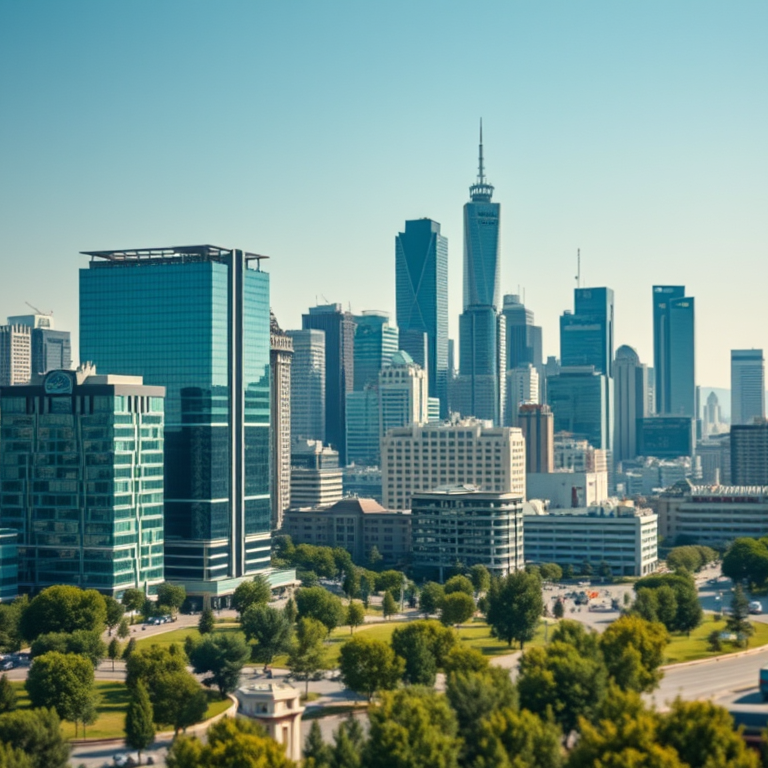
Building the Future with Innovation and Trust
Kazakhstan, the economic powerhouse of Central Asia, is fast becoming a magnet for real estate innovation. With a growing urban population, a strong construction pipeline, and a modernizing financial infrastructure, the country is perfectly positioned to benefit from digital property technologies like SQMU and SQMU-R.
By enabling fractional ownership and smart rental contracts, these platforms introduce a transparent and efficient way to engage with Kazakhstan’s housing market—empowering investors, landlords, tenants, and agents alike.
What Are SQMU and SQMU-R?
SQMU (Square Metre Unit) allows individuals to buy digital tokens representing ownership of physical square meters in real estate. It opens doors for local and global investors to enter the Kazakh property market without needing to purchase entire properties.
SQMU-R simplifies rentals through blockchain-based contracts. Tenants can sign digital leases, make payments in stablecoins, and maintain rental records, while landlords enjoy consistent income and better contract enforcement.
Together, these solutions bring smart finance, transparency, and global access to Kazakhstan’s expanding real estate ecosystem.
Practical Use Cases in Kazakhstan
1. Tenants: Securing Stable and Predictable Housing
Young professionals in Almaty, where rents are rising and urban living is desirable, can benefit from SQMU-R by:
- Signing smart contracts with fixed rental terms.
- Paying in stablecoins to avoid tenge volatility.
- Keeping digital records of their lease agreements.
This offers peace of mind in a market where inflation and currency shifts have impacted affordability.
2. Landlords: Tokenizing Assets for Flexibility and Reach
A property owner in Astana can list apartments on SQMU and:
- Sell fractional ownership (e.g., 10–20%) to investors.
- Receive crypto-based rental payments via SQMU-R.
- Open access to diaspora Kazakhs and foreign buyers.
With transparency and instant transaction records, landlords gain control while expanding their investor base.
3. Agents and Developers: Reaching Global Investors
A real estate agent promoting new apartment units in Shymkent can leverage SQMU to:
- Crowdfund development by selling digital shares of the project.
- Connect with cross-border buyers seeking exposure to Kazakhstan’s housing market.
- Offer flexible investment packages, with ownership stakes starting at just one square meter.
This changes how housing projects are marketed and financed—attracting interest beyond national borders.
4. Institutional and Retail Investors: Hedging Inflation with Real Assets
With inflation having surged to ~20% in 2023 and still normalizing (~8.4% in late 2024), investors seek resilient, income-generating assets. SQMU tokens offer:
- Exposure to real estate in a recovering currency environment.
- Diversification into fractional units across cities.
- Opportunities to enter emerging markets with lower transaction thresholds.
From international property funds to everyday savers, SQMU makes Kazakh real estate accessible, flexible, and future-ready.
5. Short-Term Rental Operators: Tapping into Tourism and Expats
Owners of holiday homes or serviced apartments in the southern Black Sea region or Almaty can use SQMU-R to:
- Automate lease terms and payment tracking.
- Accept global crypto payments from tourists, expats, or foreign workers.
- Repackage rental income into tokens that can be sold or traded.
With growing short-term travel and a digital-friendly younger generation, this sector is ripe for transformation.
Kazakhstan’s Strong Economic Foundation
Kazakhstan’s diversified economy—driven by oil, mining, and manufacturing—continues to evolve. Inflation, while volatile in 2023 (~20%), has come under control, and the tenge is stabilizing. Urban areas like Almaty and Astana remain hubs of economic activity and migration, even as affordability challenges persist.
Property prices remain relatively moderate (~$1,100–1,250 per m² in major cities), and rental yields, while modest, show growth in secondary cities like Karaganda, which saw an 11.7% YoY rent increase.
By using SQMU, these emerging opportunities can be unlocked by smaller investors, while tenants benefit from more affordable, flexible housing options.
Kazakhstan’s Digital Maturity
With over 92.9% internet penetration and nearly 96% mobile broadband coverage, Kazakhstan boasts one of the most advanced digital infrastructures in the region. Social media is widely used (76% of the population), and mobile payment adoption is high.
- Over 70% of adults have financial accounts.
- 62% use digital payments.
- QR payments, online banking, and mobile apps are becoming the norm.
The country is also exploring blockchain and digital asset frameworks. Its close neighbors—Uzbekistan, Armenia, and Georgia—have initiated digital currency pilots, and Kazakhstan is closely aligned with such innovation.
This makes the ecosystem highly compatible with SQMU and SQMU-R. Users are already equipped and willing to adopt tokenized real estate tools.
Housing Trends and Urban Dynamics
Homeownership remains dominant in Kazakhstan, supported by large-scale government housing initiatives and social privatization. However, urban migration continues to shift the dynamics:
- 58.5% of Kazakhs now live in cities.
- Construction of new apartment buildings is at record levels.
- Affordability is a growing challenge as demand rises in urban areas.
Rental markets are maturing. Temporary surges—like the 2022–23 influx of Russian migrants—exposed supply gaps but also created momentum for more professional rental practices.
As rents stabilize, SQMU-R provides a platform for:
- Offering transparent, enforceable rental agreements.
- Collecting and distributing rent digitally.
- Appealing to a younger, tech-literate renter base.
The Case for Regional Growth
While Almaty and Astana receive most real estate investment, secondary cities are quietly becoming attractive:
- Karaganda, Shymkent, and Pavlodar are seeing consistent rental growth.
- New construction spreads opportunities beyond the capital.
- SQMU enables micro-investments in these markets, drawing in smaller investors and diaspora capital.
Instead of concentrating value in a few urban centers, tokenization can democratize development across the country.
Connecting Diaspora and Foreign Capital
Kazakhs abroad often wish to invest back home but face bureaucratic and logistical challenges. SQMU resolves this by:
- Allowing direct, digital ownership of real estate shares.
- Simplifying compliance and contract transparency.
- Facilitating stablecoin transfers that bypass cross-border banking friction.
Similarly, international investors seeking emerging market exposure can enter Kazakhstan with less risk and more flexibility.
Future-Proofing Real Estate Investment
Kazakhstan is ready for the next chapter in real estate. Its cities are modernizing, its economy is stabilizing, and its digital backbone is world-class. With SQMU and SQMU-R, this progress can extend to how people rent, buy, and invest in property.
These tools are not just technologies—they are bridges: between tenant and landlord, developer and investor, homeland and diaspora.
One square meter at a time, Kazakhstan’s real estate market becomes more transparent, inclusive, and connected.
Now is the time to take the next step.

Leave a Reply