Introduction
Singapore has established itself as one of the world’s leading financial hubs and a global gateway for capital flows into Asia. Its real estate market is known for transparency, stability, and international participation, making it one of the most expensive and tightly regulated in the region. For investors, Singapore property has long been regarded as a safe haven asset, attracting capital from institutional players, wealthy families, and regional investors.
Yet despite its strengths, Singapore’s property market is not without challenges. Skyrocketing prices limit retail access, liquidity is constrained by the slow-moving nature of property transactions, and yields are compressed due to premium valuations. Tokenisation, through the SQMU framework, offers a way to preserve Singapore’s reputation for clarity while opening the market to broader participation, greater liquidity, and global comparability.
This case study examines Singapore’s current real estate dynamics, its systemic challenges, and how SQMU can provide the infrastructure for the next phase of real estate investment in one of the world’s most sophisticated markets.
Singapore’s Real Estate Market in Context
Safe Haven Status
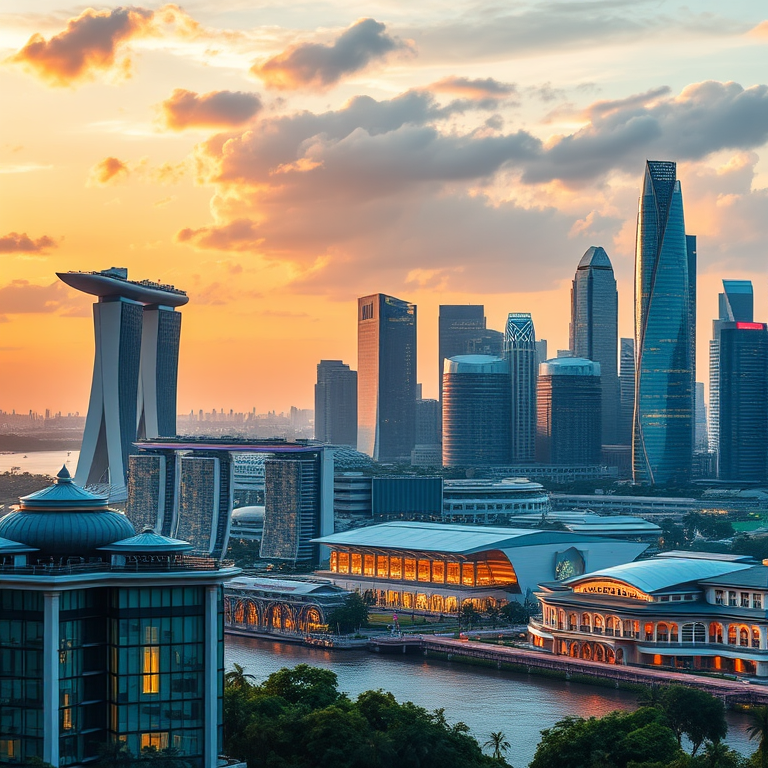
Singapore’s stability, rule of law, and robust infrastructure have long made it a magnet for global capital. Investors from China, India, the Middle East, and beyond have poured money into both residential and commercial properties, driving prices steadily upward. Prime districts such as Marina Bay, Orchard Road, and Sentosa are synonymous with luxury and exclusivity.
High Entry Costs
Property prices in Singapore rank among the highest in Asia. A condominium unit in central districts may cost millions of dollars, creating prohibitive barriers for younger or retail investors. As a result, much of the market is dominated by institutions, high-net-worth individuals, and REIT structures.
Strong Regulatory Environment
The government carefully manages the property market through taxes (such as Additional Buyer’s Stamp Duty), ownership restrictions, and lending controls. This has ensured stability and transparency, but it also adds complexity for international investors.
Institutional Concentration
Singapore’s property sector is heavily institutionalised. REITs, listed on the Singapore Exchange, account for significant capital inflows, particularly in commercial and industrial property. While REITs provide liquidity, they offer only indirect exposure and lack the granularity of ownership that tokenisation can deliver.
Challenges in the Current Market
Affordability Gaps
While Singapore’s property market is attractive, it is increasingly out of reach for local professionals and middle-class families. Prices rise faster than incomes, creating a sense of exclusion.
Liquidity Constraints
Even in a well-functioning market, property transactions are slow and expensive. Entry and exit take time, limiting flexibility for investors.
Cross-Border Restrictions
Foreign buyers face high stamp duties and other restrictions. While this protects domestic affordability, it reduces global investor participation.
Yield Compression
With Singapore property priced at a premium, rental yields are comparatively low. For global investors, the capital appreciation story is compelling, but income generation is limited.
The Case for Tokenisation
Tokenisation offers a suite of solutions tailored to Singapore’s realities:
- Fractional Access: SQMU enables smaller investors to gain exposure to prime properties without needing millions in upfront capital.
- Liquidity: Tradable tokens provide faster entry and exit than conventional property sales, transforming a slow asset class into a more dynamic one.
- Global Comparability: SQMU allows Singapore property to be benchmarked against assets worldwide in a consistent, standardised manner.
- Inclusivity Beyond REITs: Unlike REITs, tokenisation offers direct linkage to underlying properties, creating more transparency and precision.
- Cross-Border Participation: Tokenisation bypasses some of the complexity of taxes and regulations by allowing exposure via tokens settled in stablecoins.
Hypothetical Investor Stories
Local Professional: Affordable Access
Li Wei, a young professional in Singapore, dreams of owning property in Marina Bay but is priced out of the market. Through SQMU, she purchases fractional tokens in a luxury condo project. She gains exposure to capital appreciation and receives rental yields in stablecoins, building wealth without a mortgage.
Institutional Investor: Enhanced Liquidity
A regional pension fund is already active in Singapore’s REIT market but seeks more direct exposure to prime commercial assets. By purchasing SQMU tokens tied to Grade A office space, the fund achieves liquidity, transparency, and global comparability while reducing administrative overhead.
Global Investor: Diversification with Confidence
A Middle Eastern family office values Singapore’s stability but avoids the market due to stamp duties and regulatory hurdles. With SQMU tokens, the family office gains fractional exposure to Singaporean commercial property, with income paid in stablecoins. They enjoy Singapore’s safety and appreciation potential without navigating complex ownership rules.
The SQMU Advantage
1:1 Square Metre Standard
Each SQMU token represents one square metre of real estate. In Singapore’s data-driven environment, this standard ensures clarity, prevents over-issuance, and sets a transparent benchmark for property valuation.
Stablecoin Integration
Transactions and distributions occur in fiat-backed stablecoins such as USDC, aligning with Singapore’s fintech leadership. This shields investors from currency risk and facilitates cross-border participation.
Compliance Alignment
SQMU integrates seamlessly with Singapore’s regulatory ecosystem, respecting ownership restrictions while providing new channels for capital flows. This compliance-first model ensures institutional trust.
Institutional Readiness
With Singapore’s established REIT culture, SQMU is a natural extension—bridging traditional structures with tokenised models and creating a hybrid pathway for adoption.
Beyond Stablecoins: SQMU as a Common Factor
Singapore already serves as a benchmark city for global real estate. SQMU extends this role by introducing a universal, square-metre-based denominator of value. Properties in Singapore can be directly compared with those in London, Dubai, or Hong Kong using SQMU’s transparent framework.
This positions Singapore not just as a hub for property investment, but as a model jurisdiction for tokenised real estate adoption. With SQMU, Singapore becomes both a showcase and a global anchor for how tokenisation can operate within rigorous, trusted frameworks.
Conclusion
Singapore’s property market exemplifies stability, transparency, and global appeal, yet barriers of affordability, liquidity, and accessibility persist. Tokenisation via SQMU addresses these issues directly: fractionalising access, enhancing liquidity, and enabling global comparability.
For locals, it opens a path to participate in markets that seemed unreachable. For institutions, it provides a bridge between REITs and direct property ownership. For global investors, it simplifies access to one of the world’s most trusted markets.
By combining stablecoins with the SQMU 1:1 square metre standard, Singapore’s property market evolves from a premium but exclusive safe haven into a globally intelligible, liquid, and inclusive asset class—a model for tokenised real estate worldwide.

Leave a Reply