Introduction
Nigeria stands as Africa’s largest economy and most populous country, yet its real estate market remains fragmented, opaque, and vulnerable to macroeconomic shocks. Property ownership has long been regarded as a store of wealth and a hedge against naira volatility, making it a preferred choice for both locals and the diaspora. With remittances exceeding \$20 billion annually, a significant portion flows into real estate purchases. Yet this process is plagued by inefficiencies, high costs, and trust barriers.
Tokenisation offers a path forward. By fractionalising property into digital tokens, SQMU creates the possibility of a Nigerian real estate market that is liquid, transparent, and accessible to global capital. This article explores Nigeria’s unique conditions, the challenges its property market faces, and how tokenisation via SQMU can unlock a new future for both domestic and diaspora investors.
Nigeria’s Real Estate Market in Context
A Market of Contradictions
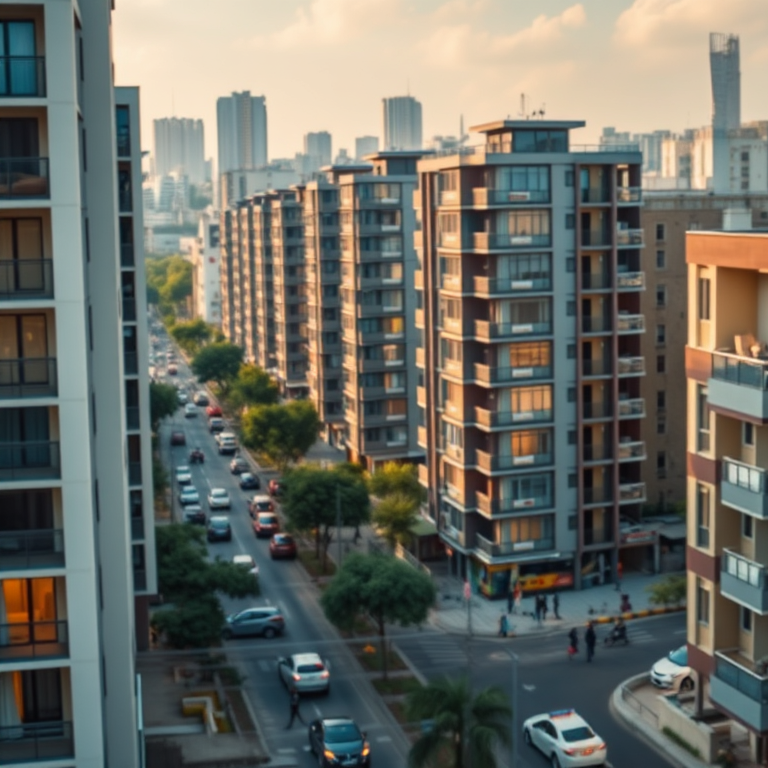
Nigeria’s property market is simultaneously booming and inaccessible. Rapid urbanisation—Lagos alone grows by nearly 600,000 people annually—fuels demand for housing. Land in urban centres has appreciated steadily, making property a reliable long-term store of wealth. Yet this growth coexists with underdeveloped infrastructure, weak mortgage penetration (less than 1% of GDP, compared to 30–40% in advanced economies), and significant affordability gaps.
Diaspora Remittances and Property
For Nigeria’s diaspora, property is a natural channel for investment. The \$20 billion sent home annually often flows into land purchases, home construction, and urban property. Families see it as a way to secure roots, protect capital from depreciation abroad, and ensure intergenerational wealth. However, the diaspora frequently encounters obstacles: unreliable brokers, fraudulent sales, incomplete documentation, and lack of enforcement mechanisms.
Real Estate as a Hedge Against Inflation
Nigeria’s inflation often runs in double digits, eroding the value of cash holdings. Real estate thus functions as a protective asset. However, the lack of liquidity means that even as values rise, owners cannot easily monetise assets. This paradox—high nominal growth but poor liquidity—makes real estate both essential and frustrating.
Challenges in the Current Market
Currency Volatility
The naira’s persistent depreciation against the dollar is perhaps the greatest challenge. For global investors, a 20% gain in property value can be wiped out by a 30% currency depreciation. FX scarcity compounds this, making repatriation of returns difficult.
Inflation and Affordability
High inflation inflates property values, but at the cost of accessibility. For ordinary Nigerians, homeownership is increasingly out of reach. For investors, the inflation-driven rise in nominal property prices makes returns difficult to calculate in real terms.
Access Barriers for Diaspora Investors
Nigerians abroad routinely report being defrauded in property transactions. Title deeds may not exist, or multiple claims may be registered against the same land. Without direct oversight, diaspora investors take on considerable risk.
Liquidity Gaps
Selling property in Nigeria is often slow and cumbersome, with deals stretching for months. Fractional ownership and secondary markets barely exist, meaning investors must commit large amounts of capital and lock it away for long periods.
The Case for Tokenisation
Fractionalisation
Tokenisation allows investors to purchase fractions of a property rather than entire assets. A \$100,000 apartment could be split into 100 square metre tokens, opening access to a much wider pool of investors. Diaspora Nigerians could invest in their home markets with smaller, more manageable commitments.
Transparency and Trust
Blockchain-based ownership records create a single, immutable source of truth. Fraudulent reselling of the same property becomes impossible. Token holders can verify ownership rights and distributions without relying on intermediaries.
Global Comparability
Stablecoins or the SQMU standard provide a neutral benchmark. A Lagos property priced in SQMU tokens can be compared directly to a property in São Paulo or Jakarta, reducing confusion from currency distortions.
Liquidity Creation
Tokens can be traded on secondary markets, transforming real estate from a static, illiquid asset into one with dynamic capital flows. Investors can sell part of their holdings without liquidating entire properties.
Hypothetical Investor Stories
Diaspora Investor: Trust and Accessibility
Chinwe, a Nigerian engineer working in London, regularly sends funds home to support her family. Her dream has always been to own property in Lagos, but she fears corruption and title fraud. Through SQMU, she purchases tokens representing apartments in Victoria Island. Dividends from rent are paid monthly in USDC. Chinwe has peace of mind, her family benefits from stable income, and she can liquidate her tokens anytime on a global marketplace.
Local Landlord: Liquidity and Expansion
Ade, a landlord in Lagos, owns a block of apartments but needs capital to renovate and expand. Traditionally, he would wait months for sales. Instead, he tokenises the property via SQMU, selling fractional tokens to diaspora and local investors. He raises funds instantly while still retaining ownership of some tokens. Ade unlocks liquidity without fully exiting his investment.
Global Investor: Diversification
Maria, a Brazilian investor seeking diversification, buys SQMU tokens representing Lagos commercial property. She receives stablecoin-based rental income and adds African exposure to her portfolio without navigating naira risk or on-the-ground complexities.
The SQMU Advantage
1:1 Square Metre Standard
Unlike other tokenisation models that rely on abstract valuations, SQMU enforces a direct 1:1 linkage between tokens and physical square metres of property. This provides clarity and prevents over-issuance.
Stablecoin Integration
All transactions and dividends are settled in fiat-backed stablecoins like USDC. This shields investors from naira depreciation, ensures comparability, and builds trust.
Compliance and Registry Alignment
SQMU can integrate with Nigeria’s land registry framework, digitising and formalising property ownership. This aligns with government drives for better transparency and property documentation.
Global Reach and Liquidity
Through tokenisation, Nigeria’s property market becomes accessible to global investors who were previously deterred by complexity and risk. Diaspora and international investors alike gain a secure, tradable, and credible mechanism to access Nigerian real estate.
Beyond Stablecoins: SQMU as a Common Factor
While stablecoins serve as a bridge, SQMU itself evolves into a global denominator of value. Because every token is minted only against real square metres, SQMU has the stability of a stablecoin with the backing of tangible assets. It becomes universally intelligible: a square metre in Lagos equals a square metre in Dubai or São Paulo, making global property comparability straightforward.
This creates a unique ecosystem where Nigerian property, expressed in SQMU, is not just comparable—it becomes a globally acceptable unit of value exchange within the real estate sector.
Conclusion
Nigeria’s real estate market is ripe for transformation. Persistent inflation, currency volatility, and structural inefficiencies create challenges but also highlight why tokenisation is so urgently needed. SQMU provides the tools to fractionalise ownership, secure trust, enable global participation, and bring liquidity to a traditionally illiquid market.
For diaspora Nigerians, SQMU is a safe, transparent, and efficient pathway into the property market. For local landlords, it is a source of liquidity and expansion capital. For global investors, it is a doorway into Africa’s most dynamic real estate market without navigating local complexity.
By anchoring value in both stablecoins and real-world square metres, SQMU not only solves the problem of Nigerian property access—it positions the market as a globally intelligible, yield-bearing, and liquid asset class for the future.

Leave a Reply