Introduction
A smart contract audit is the most critical technical milestone in any real estate tokenisation project. For property tokens representing significant economic value, the security and correctness of the underlying smart contracts are paramount. A single vulnerability could lead to loss of funds, permanent lock‑up of tokens, or unauthorised minting – any of which would be catastrophic for the issuer and the investors who rely on the integrity of the tokenised asset.
Regulators worldwide have recognised this importance. MiCA in the EU, VARA in Dubai, the FSRA in Abu Dhabi, and MAS in Singapore all expect or require that tokenised securities and asset‑referenced tokens undergo professional security audits before public offering. The Digital Operational Resilience Act (DORA) , effective January 2026, mandates threat‑led penetration testing and ICT third‑party risk management for financial entities operating in the EU – requirements that effectively demand a rigorous, ongoing security governance framework for smart contracts.
The SQMU open‑source standard – with its auditable ERC‑1155 contracts, fixed supply determinism, and modular compliance features – is designed to be audit‑ready. However, a successful audit is not merely a matter of submitting code to a security firm. It requires careful preparation: documentation, test coverage, threat modelling, dependency management, and a clear remediation plan. For property tokenisation projects, the audit must also verify the link between the smart contract and the legal structure – ensuring that the token’s economic rights are correctly encoded and that the supply is truly tied to the property’s verified square metre area.
This article provides a comprehensive guide to preparing for a smart contract audit for property tokens, using the SQMU standard as the reference implementation. It covers the audit process, common vulnerabilities specific to real estate tokenisation, documentation requirements, and how SQMU consulting can help developers and issuers achieve a successful, regulator‑ready audit. For an overview of the open‑source SQMU codebase, refer to the open‑source real estate tokenisation guide.
Why an Audit Is Essential for Property Tokens
For Investor Protection
Investors in tokenised real estate rely on the smart contract to enforce their rights: rental income distribution, transfer restrictions, redemption, and governance. A bug in the contract could prevent distributions, allow unauthorised transfers, or lock funds permanently. An audit provides independent assurance that the contract behaves as intended.
For Regulatory Compliance
As noted, regulators increasingly mandate audits. VARA’s Virtual Asset Issuance Rulebook requires that smart contracts be audited by an independent third party. MAS’s Revised Guide on Tokenisation of Capital Markets Products expects that offering documents include details of smart contract audits. MiCA’s white paper requirements include disclosures of the technology’s robustness, and under DORA, financial entities must conduct periodic security testing.
For Issuer Liability
In many jurisdictions, the issuer is liable for the accuracy of information in the whitepaper and for the proper functioning of the token infrastructure. A smart contract vulnerability that leads to loss of funds could result in legal action from investors, as well as fines from regulators.
For Insurance and Institutional Acceptance
Institutional investors and custodians often require audit reports before engaging with a token. Property insurance providers may also require evidence of smart contract security.
For Open‑Source Credibility
SQMU is open source, meaning anyone can inspect the code. An audit report published alongside the repository provides an independent verification that the code is safe, enhancing trust and adoption.
The Audit Process: What to Expect
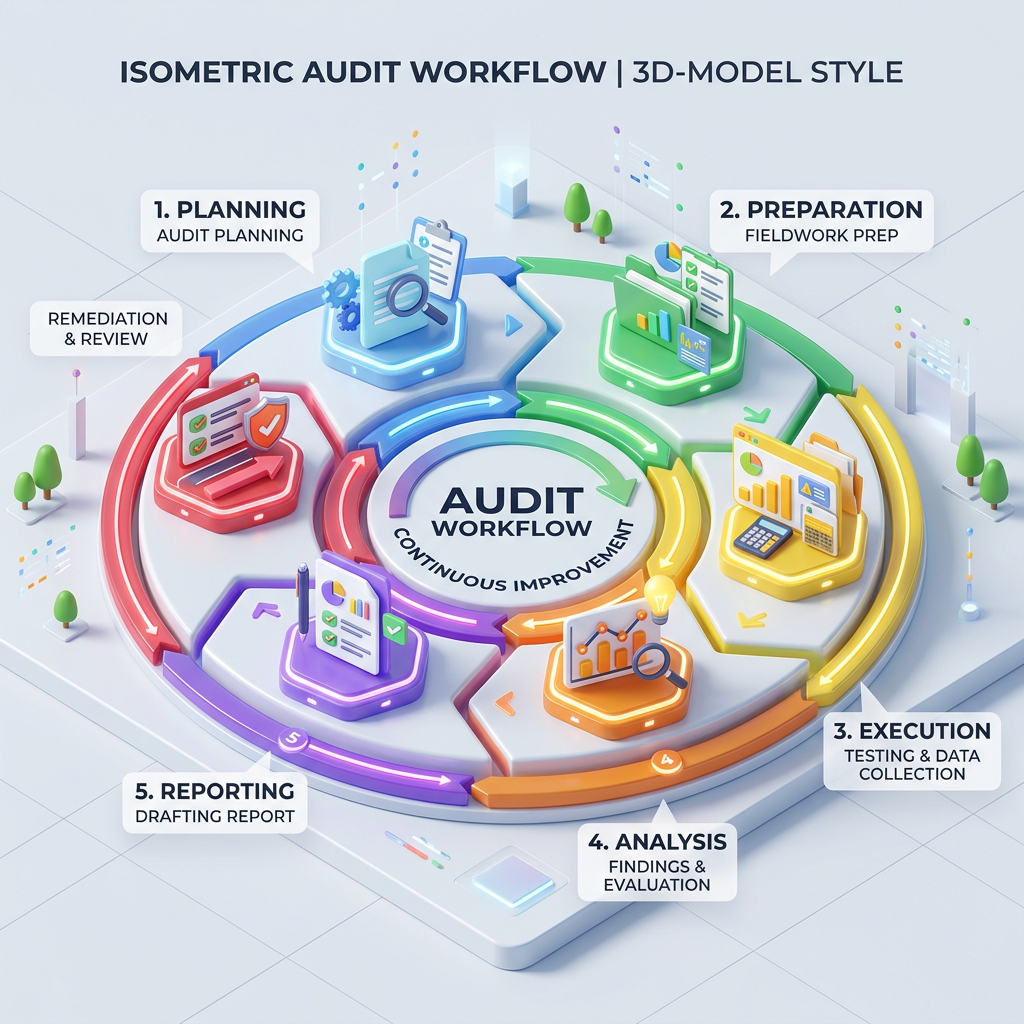
A typical smart contract audit for a real estate tokenisation project proceeds through several stages.
1. Scoping and Kick‑off
The audit firm defines the scope: which contracts, which functions, and which threat model. For property tokens, the scope typically includes:
- The token contract itself (ERC‑20, ERC‑1155, or similar).
- The distribution/payment contract (e.g., atomic distributor).
- The trade/transfer contract (if applicable).
- The escrow contract (for security deposits).
- Any peripheral contracts (oracles, factory contracts).
The issuer provides the code, documentation, and test suite.
2. Automated Analysis
The audit firm runs static and dynamic analysis tools to identify common vulnerabilities: reentrancy, unchecked return values, integer overflow (though Solidity 0.8+ has built‑in checks), access control issues, front‑running, and gas inefficiencies.
3. Manual Review
In‑depth line‑by‑line review by experienced auditors. This is where complex logic errors, business logic flaws, and subtle interactions between contracts are discovered. For property tokens, the manual review will examine:
- Supply integrity: Is the total supply fixed and correctly tied to the property’s area? Can it be changed after deployment?
- Access controls: Who can mint, pause, or upgrade the contract? Are those addresses secure (e.g., multi‑signature)?
- Distribution logic: How are rental payments distributed? Is the pro‑rata calculation correct? Are rounding errors handled safely?
- Transfer restrictions: Are whitelist controls properly implemented and enforceable?
- Escrow safety: Can the escrow contract be drained? Are the release conditions robust?
4. Threat Modelling
The auditor considers potential attack vectors: malicious administrators, oracle manipulation, front‑running of distribution claims, and economic attacks on the epoch vaults.
5. Reporting
The auditor produces a report detailing:
- Critical, high, medium, and low severity findings.
- Recommendations for remediation.
- A summary of passed tests and verified invariants.
6. Remediation and Re‑audit
The issuer fixes the findings. For critical and high severity issues, the auditor typically requires a re‑audit of the changed code before issuing a final clean report.
7. Final Report and Publication
Once all issues are resolved, the auditor issues a final report. For open‑source projects like SQMU, the report is often published publicly alongside the code to maximise transparency.
The entire process typically takes 2–6 weeks, depending on the codebase size and the auditor’s availability. For real estate tokenisation projects with well‑structured code (like the SQMU contracts), the timeline is often at the shorter end.
Preparing for an Audit: A Step‑by‑Step Guide
Proper preparation dramatically reduces audit time and cost, and increases the likelihood of a clean report. The following steps are essential for property tokenisation projects.
1. Use Standard and Well‑Audited Templates
Instead of writing custom contracts from scratch, start with a battle‑tested standard. The SQMU ERC‑1155 contracts have already undergone professional audits and are used in production deployments. By building on an audited foundation, you inherit that security – your custom layer will be smaller and easier to audit.
2. Write Comprehensive Tests with Good Coverage
Auditors will run your test suite. A well‑tested codebase demonstrates that you have considered edge cases. Requirements:
- Unit tests for every function.
- Integration tests for interactions between contracts (e.g., token minting, distribution, trading).
- Fuzzing/invariant tests using tools like Foundry or Echidna to automatically explore edge cases.
- Test coverage >90% (line and branch coverage). Use coverage tools to identify untested paths.
- Test isolation – each test should be independent and repeatable.
For property tokens, specific test scenarios should include: minting correct supply, preventing minting beyond max supply, correctly calculating rental distributions with varying token balances, handling of late payments and fees, and security deposit release with and without claims.
3. Document the Code Extensively
Auditors need to understand your intent to determine whether the code matches it. Documentation should include:
- NatSpec comments on every function, parameter, and return value. Include the business logic purpose, not just the technical behaviour.
- High‑level architecture diagrams showing how contracts interact.
- Design decisions and assumptions documented in a
READMEorDESIGN.md. For example: “We assume the property’s area is certified by a licensed surveyor and encoded at deployment; the supply cannot be changed after.” - Risk register listing known limitations or intentional trade‑offs (e.g., “The contract uses a single oracle for price feeds; if the oracle is compromised, distributions may be incorrect.”).
4. Formalise the Specification
A written specification (or “yellow paper”) that describes the contract’s behaviour in natural language or mathematical terms. This helps auditors verify that the code implements the intended logic. For SQMU‑based projects, the whitepaper serves as a partial specification; the audit preparation should supplement it with precise technical invariants.
Examples of invariants to formalise:
totalSupply(tokenId) == certifiedAreaInSqmfor all token IDs.balanceOf(tokenId, address) + balanceOf(tokenId, other) <= totalSupply(tokenId)– but that’s trivial; more specific: “For each epoch, the sum of SQMU‑R token balances across all investors equals the total square metre area of properties in the epoch.”- “The escrow contract’s balance can only change via deposit, claim acceptance, or dispute resolution; no direct withdrawal by owner.”
5. Clean Up the Codebase
Before submitting for audit:
- Remove dead code, unused imports, and commented‑out sections.
- Follow a consistent style guide (e.g., Solidity style guide).
- Avoid overly complex or “clever” code – prefer clarity over optimisation.
- Ensure the code compiles without warnings (use
Solhintor similar). - Pin Solidity compiler version with
pragma solidity ^0.8.x(specific minor version preferred).
6. Prepare a Threat Model and Attack Surface Analysis
Document the potential attack vectors you have considered and how the code mitigates them. This shows auditors that you have thought about security systematically. For property tokens:
- Reentrancy: Are there external calls that could be reentered? (All state changes should happen before external calls, or use
ReentrancyGuard.) - Front‑running: Can an attacker observe a pending transaction and insert their own to gain advantage? (Examples: sniper bots on deposit events.)
- Round‑off errors: How are integer divisions handled? Do they always round in favour of the protocol (i.e., using
divwith rounding down)? Can rounding errors be exploited over many distributions? - Admin abuse: What powers does the contract owner have? Are they time‑locked or multi‑sig? Is there a timelock for upgrades?
- Oracle manipulation: If the contract uses oracles (e.g., for FX rates or property valuation), how are they secured? Are there circuit breakers?
7. Provide Deployment and Interaction Scripts
Auditors need to see how the contracts are deployed and initialised. Provide scripts (e.g., Hardhat or Foundry) that deploy the full suite, set initial parameters, and mint tokens. This allows auditors to test the exact configuration that will be used in production.
8. Engage a Professional Auditor Early
Don’t wait until the code is “finished” to involve auditors. Many firms offer preliminary reviews or consultancy to help you prepare. Early engagement can catch architectural issues before they become embedded.
9. Consider Formal Verification (Optional but Valuable)
For high‑value property tokens, consider formal verification using tools like Certora Prover or SMTChecker. Formal verification can mathematically prove that certain properties hold for all possible inputs, providing stronger assurance than testing alone.
10. Plan for Remediation Time
Audit findings are inevitable. Build at least 2–4 weeks into the project timeline for fixing issues and conducting re‑audits. The most common delays occur when critical findings are discovered late and require significant refactoring.
Common Vulnerabilities in Real Estate Token Contracts
Based on past audits of property token projects, the following vulnerabilities are particularly common.
1. Incorrect Supply Determinism
Issue: The token supply is not fixed to the property’s area, or there exists a minting function that can be called after deployment.
Mitigation: Deploy the token contract with the supply set in the constructor, disable any mintfunctions unless they are strictly controlled (e.g., upgrade contracts must handle migration carefully). SQMU’s design avoids this by setting supply at deployment.
2. Improper Access Control
Issue: Functions that should be restricted (e.g., setWhitelist, pause) are unprotected.
Mitigation: Use onlyOwner modifiers or role‑based access (e.g., OpenZeppelin’s AccessControl). For critical functions, use a multi‑signature wallet or timelock.
3. Reentrancy in Distribution Logic
Issue: When distributing rent to investors, the contract calls transfer on each investor. An attacker can implement a malicious fallback function to reenter the distribution function and claim again.
Mitigation: Use a pull‑based distribution model (investors claim their yield), or use ReentrancyGuard on distribution functions. SQMU’s epoch vault uses a pull model.
4. Rounding Errors in Pro‑Rata Distributions
Issue: Solidity integer division truncates. Over many distributions, the cumulative rounding error could cause funds to remain stuck in the contract.
Mitigation: Keep a unclaimed remainder variable and distribute it at the end of the epoch. Alternatively, use scaled arithmetic.
5. Uninitialised Proxies or Upgrade Risks
Issue: If using upgradeable contracts (UUPS or beacon proxies), the initialisation function might be unprotected, allowing anyone to become the owner.
Mitigation: Use initializer modifiers and ensure the contract is initialised atomically in the deployment transaction.
6. Front‑Running on Epoch Deposits
Issue: An attacker monitoring the mempool could front‑run a deposit to an epoch vault, causing the depositor to receive a different share than expected.
Mitigation: Implement a commit‑reveal scheme or use a minimum deposit time window. However, for most RWAs, the risk is low because deposits are not competitive; still, it should be considered.
7. Oracle Dependency Without Fallback
Issue: The contract relies on a single price feed. If the oracle fails or is manipulated, distributions or liquidations could be incorrect.
Mitigation: Use multiple oracles, a time‑weighted average price (TWAP), or circuit breakers that pause the contract if oracle data is stale.
8. Gas Limit Issues in Loops
Issue: The contract iterates over an unbounded array (e.g., a list of investors) to distribute yields. If the array grows large, the transaction may exceed the block gas limit.
Mitigation: Use a pull‑based distribution or maintain a “distribution balance” per investor that they claim individually.
9. Timestamp Dependence
Issue: Using block.timestamp for due dates or release conditions can be manipulated by miners within a small range.
Mitigation: Accept the small manipulation risk; for rental payments, a few seconds is not material. For longer periods, use block numbers or oracle timestamps.
10. Inconsistent Legal‑Code Mapping
Issue: The smart contract rights (e.g., redemption) do not match the legal documents or whitepaper.
Mitigation: Ensure the audit includes a review of the legal‑technical consistency. The audit report should note any discrepancies.
The SQMU standard has been designed to avoid these vulnerabilities, but each customisation or integration may reintroduce them. Consulting services can help review your project’s specific extensions.
How Consulting Services Simplify Audit Preparation
SQMU consulting offers a structured service to prepare property token projects for a successful audit.
1. Code Review and Remediation
We review your customised SQMU contracts (or other token contracts) for common vulnerabilities, style violations, and logic errors before you submit them to a formal auditor. This pre‑audit can catch up to 80% of low‑hanging issues, saving time and money.
2. Documentation Generation
We help produce the required documentation: NatSpec comments, architecture diagrams, design decision logs, and risk registers. We also prepare formal specifications (invariants) that auditors can validate.
3. Test Suite Enhancement
We assess your test coverage and write additional tests for edge cases, including fuzzing and invariant tests using Foundry. We ensure the test suite is runnable and passes under various conditions.
4. Threat Modelling Workshop
We facilitate a threat modelling session with your team to identify potential attack vectors specific to your property token. We produce a threat model document that can be shared with auditors.
5. Auditor Selection and Liaison
We maintain relationships with established audit firms experienced in real estate tokenisation. We help you select the right auditor based on project size, budget, and timeline, and we manage communications during the audit.
6. Remediation Support
When the audit report comes back, we help you understand the findings and prioritise fixes. For critical issues, we assist in redesigning affected components. We also manage the re‑audit process.
7. Final Integration
We ensure that the final audited contracts are correctly deployed, that the addresses are verified on block explorers, and that the audit report is published alongside the whitepaper and open‑source code.
By engaging consulting services early, you reduce the risk of costly delays and guarantee that your property token meets the security standards expected by regulators and investors.
Preparing for the Audit on SQMU‑Based Tokens
If you are using the SQMU open‑source contracts, many of the foundational security concerns have already been addressed. Your audit preparation should focus on:
- Custom compliance modules: Any whitelist, transfer restriction, or jurisdiction‑specific logic you added.
- Integration with r3nt or epoch vaults: The interactions between the SQMU token and the rental distribution contracts.
- Deployment and upgrade scripts: Ensuring the initialisation parameters are set correctly.
- Oracle integrations: If you use price feeds for valuations or FX conversions.
- Off‑chain dependencies: If the token relies on off‑chain oracles or relayers.
Because the core SQMU contracts are open source and audited, the incremental audit cost is significantly lower than starting from scratch.
Conclusion
A smart contract audit is not a mere box‑ticking exercise; it is a critical quality assurance and risk management process for any tokenised real estate project. A successful audit requires careful preparation: clean code, comprehensive tests, thorough documentation, and a clear understanding of potential vulnerabilities. Regulators increasingly expect such audits, and investors demand the confidence they provide.
The SQMU open‑source standard offers a solid foundation, having been designed with auditability and security as core principles. However, each customisation and integration must be rigorously examined. SQMU consulting provides end‑to‑end support for audit preparation, from pre‑audit code review to remediation and final deployment.
For property owners, developers, and platforms seeking to launch a tokenised real estate project, investing in a professional audit preparation service is not an expense – it is a critical investment in credibility, security, and regulatory approval.
To begin your audit preparation journey, contact us via the consulting enquiry form. We will assess your current codebase, provide a roadmap for audit readiness, and connect you with trusted audit partners.
Further Reading
- Open Source Real Estate Tokenisation: The SQMU Standard
- SQMU Standard: Real Estate Tokenisation by the Square Metre
- r3nt: A Structured Framework for Tokenised Rental Contracts
- How Distribution, Investor Access, and Market Making Drive Tokenised Real Estate Platforms
- Real Estate Tokenization Liquidity: How SQMU Tokens Enable Stable On‑Chain Property Markets

Leave a Reply