Introduction
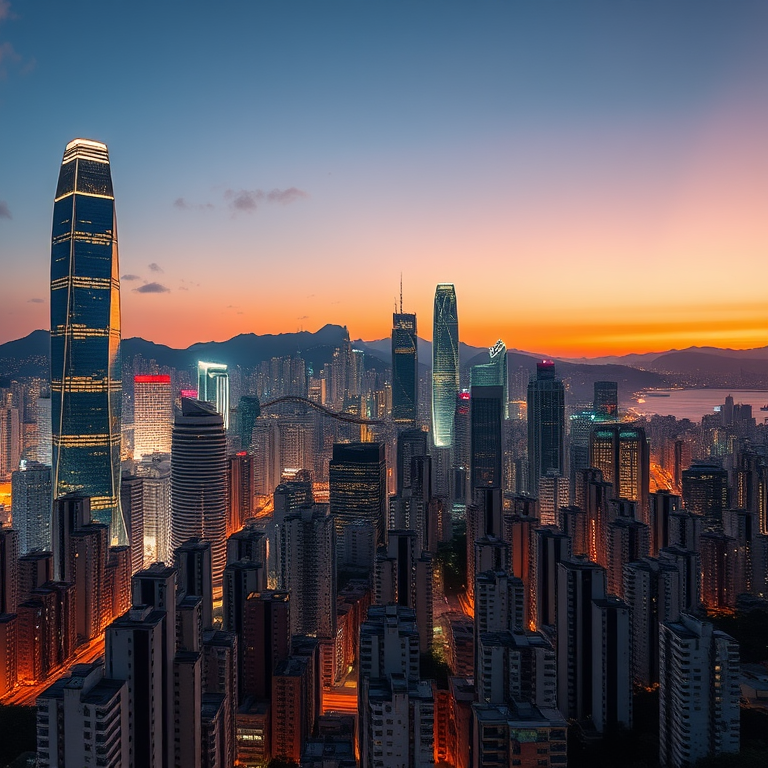
Hong Kong has long been recognised as one of the world’s most valuable and tightly packed real estate markets. From the luxury towers of Central to the dense residential districts of Kowloon, property here is both a wealth store and a reflection of the city’s political-economic climate. As a global financial hub and gateway to China, Hong Kong’s real estate is often viewed as a benchmark for value, resilience, and global capital flows.
Yet the market faces deep structural challenges: ultra-high valuations, illiquidity, and growing geopolitical uncertainty. For many, property is unattainable; for others, it is risky and difficult to exit. Tokenisation via SQMU provides a pathway to fractional ownership, enhanced liquidity, and global comparability, unlocking Hong Kong property as an accessible and globally intelligible asset class.
Hong Kong’s Real Estate Market in Context
Ultra-High Valuations
Hong Kong consistently ranks among the most expensive property markets in the world. Apartments are small yet cost millions of US dollars, with price-to-income ratios stretching beyond affordability for most local residents. For global investors, the market remains attractive but capital-intensive.
A Global Financial Gateway
Hong Kong’s role as a bridge between mainland China and global markets makes its real estate sector unique. International investors often view property in Hong Kong as both a diversification strategy and a proxy for China exposure, while mainland investors use it as a channel to move wealth into a globally recognisable asset.
Concentration of Ownership
A few powerful developers dominate Hong Kong’s property landscape, limiting competition and entrenching control. This concentration often stifles innovation and perpetuates high barriers to entry for smaller investors.
Political-Economic Crossroads
Recent years have introduced new risks. The city’s political integration with mainland China has created caution among some global investors, even as others see opportunity. Combined with global economic headwinds, this uncertainty makes liquidity and flexibility all the more valuable.
Challenges in the Current Market
Exclusivity and Accessibility
Hong Kong’s property is unaffordable for most residents. Even middle-class families find ownership out of reach, and younger professionals are effectively priced out.
Illiquidity Despite Demand
While demand is high, property transactions are slow, costly, and require large capital commitments. Selling or subdividing assets is cumbersome, leaving investors locked into long positions.
Barriers for Global Investors
Complex legal frameworks, taxes, and high entry thresholds discourage wider international participation. Small and medium investors often find Hong Kong’s market inaccessible.
Geopolitical and Currency Risks
Hong Kong operates under a currency peg to the US dollar, which provides stability but exposes it to broader US-China dynamics. Political shifts add another layer of risk, complicating investment decisions.
The Case for Tokenisation
Tokenisation can address these systemic issues directly:
- Fractional Access: SQMU tokens allow investors to purchase fractions of high-value Hong Kong properties, lowering barriers to entry.
- Liquidity: Tradable tokens create secondary markets, enabling faster entry and exit compared to conventional property transactions.
- Hedge Against Volatility: By denominating investments in stablecoins, SQMU provides protection against currency fluctuations and geopolitical uncertainty.
- Global Comparability: Properties in Hong Kong can be valued transparently against global peers through the square-metre standard.
Hypothetical Investor Stories
Local Professional: Affordable Entry
Kenji, a 28-year-old professional in Kowloon, cannot afford to purchase even a small flat. Through SQMU, he invests in tokens representing fractional ownership of a central Hong Kong apartment. He gains exposure to the city’s property market, once unattainable, and receives rental yields in stablecoins.
Diaspora Investor: Secure Connection
Ming, a Hong Kong native living in Vancouver, wants to maintain ties to her home city. Traditional property purchases are complex and capital-intensive. Instead, she invests in SQMU tokens representing office properties in Central. Her dividends are paid in stablecoins, bypassing tax and regulatory hurdles, while ensuring transparency.
Global Investor: Diversification Without Friction
A European hedge fund seeks exposure to Asia but is wary of navigating Hong Kong’s legal complexities. By purchasing SQMU tokens tied to commercial properties, the fund achieves diversification, transparent ownership, and liquidity—without needing to allocate massive capital upfront.
The SQMU Advantage
1:1 Square Metre Standard
Every SQMU token equals one square metre of property. In a market where opacity and exclusivity dominate, this provides clarity, enforces scarcity, and prevents over-issuance. Investors gain confidence in the standard’s precision.
Stablecoin Integration
Rental income, dividends, and cross-border transactions are executed in fiat-backed stablecoins such as USDC. This protects investors from currency fluctuations and simplifies global participation.
Compliance Alignment
Hong Kong’s common law system and evolving financial regulations create a foundation where SQMU can operate transparently while ensuring legal security.
East-West Bridge
SQMU provides a neutral platform, bridging global investors seeking Asian exposure and mainland Chinese investors seeking internationally intelligible property assets.
Beyond Stablecoins: SQMU as a Common Factor
Hong Kong’s real estate already serves as a global benchmark for value and density. SQMU extends this by introducing a universal, square-metre-based denominator that makes Hong Kong property globally comparable and liquid.
This shifts the perception of Hong Kong’s market: from being an exclusive preserve of wealthy families and institutions to becoming a transparent, fractionalised, and globally accessible ecosystem.
Conclusion
Hong Kong’s property market remains iconic, but it is also exclusive, concentrated, and fraught with political-economic uncertainty. Tokenisation via SQMU offers a way to democratise access, enhance liquidity, and provide global comparability.
For locals, SQMU makes participation in Hong Kong real estate possible without prohibitive capital requirements. For diaspora communities, it creates a secure bridge back home. For global investors, it offers diversification and liquidity without friction.
By anchoring value in both stablecoins and square metres, SQMU positions Hong Kong not just as a financial hub but as part of a globally standardised, liquid, and transparent real estate ecosystem—a model for the future of urban property markets.

Leave a Reply