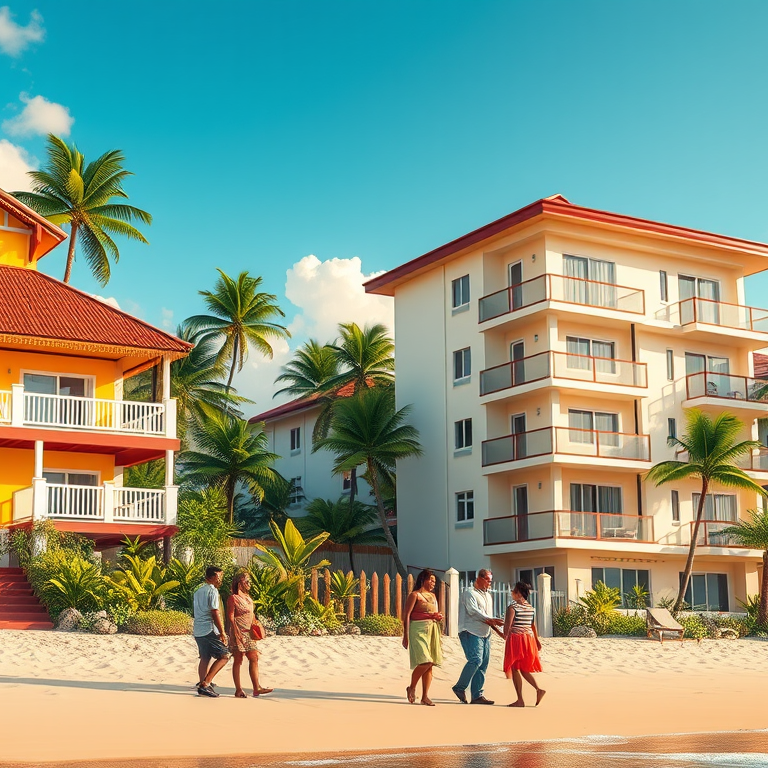
Samoa, a Pacific Island nation of just over 219,000 people, offers a unique opportunity for tokenised real estate models like SQMU and SQMU-R. With a highly dispersed population, a tradition of kinship-driven homebuilding, and remittances contributing nearly 28% of GDP, Samoa is perfectly positioned to benefit from blockchain-based real estate solutions that formalise and streamline diaspora investments.
SQMU and SQMU-R Explained
- SQMU (Square Metre Unit) allows for the fractional ownership of real estate through blockchain-based tokens. Investors can purchase as little as 1 m² of a home or apartment, facilitating low-barrier entry.
- SQMU-R represents tokenised rental contracts, enabling income from property leases to be paid out automatically to token holders.
For Samoa, these tools offer a formal, transparent, and tech-forward solution to a housing system still driven heavily by informal finance and family connections.
Use Cases for SQMU/SQMU-R in Samoa
1. Tenants and Urban Professionals
In Apia and Salelologa, short- and long-term rentals are common among workers, NGOs, and small businesses. Tenants could:
- Pay rent in stablecoins (e.g. USDC), avoiding manual international transfers
- Use smart contracts to secure leases, making transactions faster and safer
- Link rent payments with diaspora sponsors (e.g. children or relatives abroad paying rent back home)
For example, a Samoan professional renting a flat in Apia could have her rent paid monthly by a sibling in New Zealand using SQMU-R linked to the property.
2. Landlords and Family Homeowners
Most Samoan homes are family-built, especially on customary land. SQMU introduces a new mechanism:
- Families can tokenize new apartment developments or guesthouses to raise capital
- Rental yields from beachside fales or town rentals can be issued as SQMU-R tokens
- Long-standing homeowners can sell small stakes in their property to fund upgrades
A family that owns a cluster of seaside fales could raise money from overseas relatives via SQMU to build modern amenities. Rent from tourist stays would be tokenised and shared using SQMU-R.
3. Real Estate Agents and Developers
Formal property agents are limited, but tokenisation empowers new forms of participation:
- Projects can be marketed to diaspora communities in New Zealand, Australia, and the U.S.
- A church or diaspora co-op could collectively purchase SQMU tokens in a new Apia apartment complex
- Agents could use smart contracts for lease management and investor reporting
For instance, a diaspora-owned developer could raise funds from Samoan-New Zealanders to build housing in Apia, distributing rental profits via SQMU-R.
4. Diaspora and Collective Investors
Samoa’s diaspora is its greatest financial engine:
- Over 100,000 Samoans live in New Zealand alone
- Remittances (~28% of GDP) are often used for home construction and family support
- SQMU provides a new option: structured property ownership instead of one-off cash transfers
A Samoan church group in Auckland could invest in a Salelologa rental building through SQMU, earning tokenised returns during peak tourism months.
Economic Landscape and Housing Affordability
Samoa’s economy is small but steady. GDP is around US$1.2 billion, with per capita income of approximately US$5,400. The Samoan Tala (WST) is pegged to the New Zealand Dollar, offering stability in currency conversion for offshore investors.
Housing affordability remains a challenge:
- Most homes are built with diaspora funds or family pooling
- Mortgages are rare and interest rates are high
- Formal ownership is strongest in urban areas; rural families build on customary land
Tokenisation helps in multiple ways:
- Provides an investible structure for informal diaspora contributions
- Lets developers offer 1 m² stakes to multiple small investors instead of relying on large loans
- Enables Fijian-style hybrid models, blending family ownership with commercial capital
Technology and Infrastructure Readiness
Samoa’s digital infrastructure is improving:
- Internet penetration is about 58%, with ~127,000 users
- Mobile coverage exceeds 85%, and most households have access to phones
- Electricity coverage is good in Apia, but less so in outer villages
Key enablers include:
- The Tui-Samoa submarine cable (recently deployed) offering faster connectivity
- A rise in smartphone adoption among youth and professionals
- Growing use of digital payments (Visa, Mastercard, mobile wallets)
Although blockchain awareness is still low, youth-led and business-driven adoption is expected to rise. Diaspora users are already tech-savvy and familiar with crypto assets like Bitcoin and stablecoins.
Housing Market Trends
Urban vs. Rural
- 83% of Samoans live in rural areas, but most rentals are concentrated in Apia
- Traditional homeownership dominates, particularly on customary land
- Urban migration is growing, expanding rental demand in Apia and Salelologa
Short-Term Rentals
- Coastal fales and beach cottages are widely used by tourists
- Tourism is seasonal, but rising again post-COVID
- Properties are family-managed, but often underfunded and underutilised
With SQMU-R:
- These properties could be formalised into tourist rental portfolios
- Diaspora investors could own a piece of the income stream, supporting maintenance and upgrades
- For example, a thatched cottage in Lalomanu Beach could issue 500 SQMU-R tokens, each representing a portion of monthly Airbnb income
Leveraging Remittances through Tokenisation
Rather than sending money home informally:
- Diaspora Samoans can invest directly in income-generating property
- Families back home benefit from better housing or rental yield
- The investment cycle becomes sustainable and wealth-building
Imagine a diaspora father in Brisbane buying SQMU tokens in a new Salelologa home, where his children live. He earns stable rental yield and supports the household at the same time.
Opportunities and Strategic Impact
Samoa stands to benefit in multiple ways:
- For investors: Transparent property access in the Pacific
- For residents: Easier home upgrades, capital raising, and rental monetisation
- For agents and businesses: Scalable models for lease management and capital attraction
Tokenisation also supports social cohesion:
- Diaspora Samoans remain connected to their homeland
- Church groups and community orgs can invest collectively
- Digital platforms reduce risks and misunderstandings around informal funding
Outlook and Deployment
Samoa’s readiness may be behind New Zealand or Fiji in digital maturity, but its diaspora capital is far greater per capita. The country is poised for early pilot deployments led by:
- Diaspora community groups
- Real estate cooperatives
- NGOs supporting housing
Future potential includes:
- Full digital property platforms with KYC onboarding
- Mobile-first dashboards for investment tracking
- Integration with remittance channels
Final Thoughts
With SQMU and SQMU-R, Samoa can bridge traditional kinship finance with modern digital infrastructure:
- Properties can be shared, not just inherited
- Income from rentals can reach across oceans
- Families, investors, and developers work together
For a nation long built on mutual support, SQMU introduces a new era of empowerment—harnessing every Tala, every square metre, to build a more connected and financially secure Samoa.

Leave a Reply