Introduction
Russia is the world’s largest country by landmass, with vast and diverse real estate assets ranging from Moscow’s high-end apartments to agricultural land in Siberia. Historically, its property market has attracted both domestic elites and foreign investors seeking yield, diversification, and exposure to Russia’s resource-driven economy. However, recent geopolitical events, sanctions, and financial isolation have fundamentally reshaped its real estate landscape.
Today, Russia’s property sector remains significant but constrained by limited capital inflows, rouble volatility, and illiquidity. Tokenisation, powered by SQMU, offers a forward-looking pathway to restore transparency, create liquidity, and make Russian property globally intelligible—even under conditions of isolation.
Russia’s Real Estate Market in Context
Moscow and St. Petersburg as Core Hubs
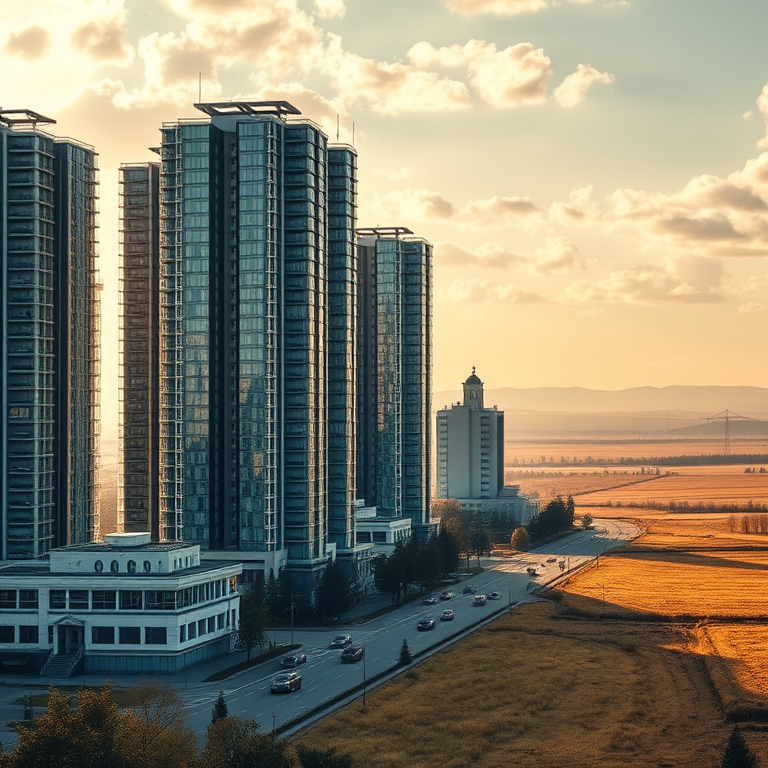
Russia’s two major cities dominate its real estate sector. Moscow’s luxury residential towers and commercial complexes once drew billions in foreign capital, while St. Petersburg has been seen as a cultural and commercial alternative. Beyond these hubs, secondary cities and regional developments remain undercapitalised but hold long-term potential.
A Market in Transition
Since the imposition of sanctions, foreign direct investment in real estate has fallen sharply. Domestic demand remains strong among elites and institutions, but market liquidity has tightened. Real estate retains its role as a preferred wealth-preserving asset, yet it is increasingly insular.
Wealth Concentration
Much of Russia’s prime property is controlled by oligarchs and institutional investors, leaving limited access for smaller buyers. For ordinary Russians, high entry costs and lack of financing options restrict participation.
Challenges in the Current Market
Sanctions and Financial Isolation
Access to global capital markets has been restricted. International investors are reluctant or unable to engage, while Russian developers find it harder to raise funds abroad.
Currency Volatility
The rouble has experienced sharp swings, eroding confidence and complicating long-term planning. For foreign investors, rouble risk adds another deterrent to entering the market.
Limited Capital Inflows
With sanctions reducing global access, domestic investors and a few allied countries provide most of the capital. This limits diversification and depresses liquidity.
Illiquidity
Property transactions are slower, demand is weaker, and sellers struggle to exit positions quickly. Real estate remains a store of value but with significant barriers to monetisation.
Transparency and Governance
Concerns over property rights enforcement, opaque ownership structures, and governance issues further discourage investors.
The Case for Tokenisation
Tokenisation introduces mechanisms that directly address these systemic issues:
- Alternative Capital Channel: Blockchain tokenisation allows property to attract capital outside traditional banking rails, less affected by sanctions.
- Stablecoin Settlement: Pegging distributions and transactions to stablecoins reduces reliance on the rouble and provides confidence in valuations.
- Fractionalisation: Properties can be divided into small, affordable units, expanding access for domestic retail investors.
- Liquidity Creation: Tradable tokens establish secondary markets, enabling faster entry and exit compared to traditional real estate.
- Diaspora Participation: Russian expatriates can invest securely and transparently, receiving dividends in stablecoins instead of navigating local restrictions.
Hypothetical Investor Stories
Local Example: Expanding Access
Anastasia, a young professional in Moscow, cannot afford a full apartment in the city’s centre. Instead, she purchases SQMU tokens representing fractional ownership in a new residential complex. She gains exposure to appreciation and receives rental dividends in stablecoins, making participation feasible.
Diaspora Example: Secure Investment from Abroad
Ivan, a Russian émigré living in Germany, wishes to maintain ties with his family property in Moscow but avoids dealing with roubles. Through SQMU, he invests in tokenised apartments, receiving dividends in USDC. This bypasses restrictions and currency volatility, giving him a stable link to the Russian market.
Global Example: Risk-Tolerant Capital
A frontier-emerging markets fund in Asia sees value in undervalued Moscow office properties. By purchasing SQMU tokens, the fund gains exposure without navigating traditional Russian banking rails, while mitigating risk through stablecoin settlement and fractional entry.
The SQMU Advantage
1:1 Square Metre Standard
SQMU enforces a strict rule: one token equals one square metre of real estate. In a market often criticised for opacity, this creates clarity and prevents over-issuance. Investors know that their holdings are directly tied to physical property.
Stablecoin Integration
All cash flows—rents, dividends, and transactions—are denominated in fiat-backed stablecoins such as USDC. This shields investors from rouble volatility and provides comparability across borders.
Compliance Adaptability
While Russia faces complex regulatory conditions, SQMU’s architecture can align with domestic frameworks while maintaining international intelligibility. This dual approach balances local compliance with global trust.
Bridge Under Isolation
With sanctions limiting traditional channels, SQMU becomes a neutral bridge. It enables capital flows from the diaspora and allied investors without reliance on sanctioned financial institutions.
Beyond Stablecoins: SQMU as a Common Factor
In Russia’s context, the SQMU standard is especially valuable. Rather than relying on roubles or fluctuating informal benchmarks, SQMU provides a neutral, globally intelligible denominator for property value.
Moscow square metres priced in SQMU can be compared directly to Dubai, Istanbul, or São Paulo. This positions Russian property within a global framework, ensuring transparency and comparability even under conditions of isolation.
Conclusion
Russia’s real estate market faces unprecedented challenges: sanctions, currency volatility, limited capital inflows, and illiquidity. Yet the market remains vast, diverse, and culturally anchored as a store of wealth. Tokenisation with SQMU offers a structural solution: fractional access, stablecoin-based participation, liquidity, and global comparability.
For local professionals, SQMU lowers barriers to entry. For diaspora Russians, it provides a secure bridge back to home markets. For global risk-tolerant funds, it offers a channel to engage without traditional frictions.
By anchoring property to both stablecoins and square metres, SQMU ensures that Russian real estate is not isolated but instead remains part of a globally intelligible, liquid, and standardised asset class—a forward-looking bridge even in times of geopolitical constraint.

Leave a Reply