Abstract
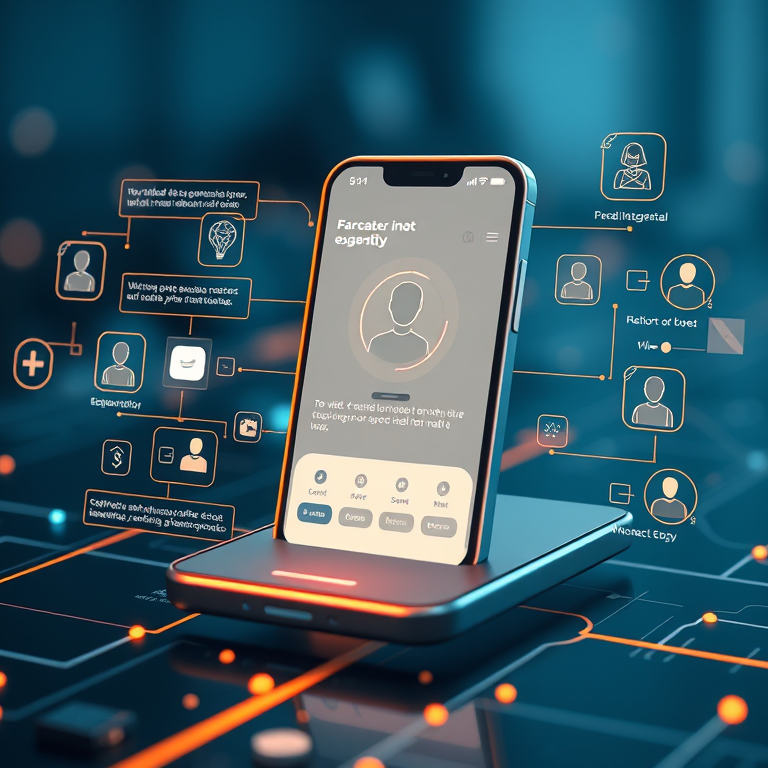
Tokenised real-estate platforms require a unified model for identity, payments, and user interaction, especially when serving global retail investors. Farcaster’s mini-app architecture provides a decentralised identity layer, seamless wallet integration, and in-frame transactional flows without requiring users to switch contexts. This article defines the Farcaster mini-app system, explains its mechanics and integration points, and analyses how the fusion of social identity, payments, and rental-income UX improves adoption, reduces friction, and enhances transparency. Constraints—including protocol limitations, regulatory considerations, and app-layer dependencies—are evaluated across jurisdictions. The article then maps the Farcaster integration into the SQMU architecture, where identity, square-metre ownership, payments, and SQMU-R rental distributions coexist natively. The synthesis positions Farcaster as the interface layer that operationalises SQMU’s measurement-based standard for real users.
Section 1 — Definition
Farcaster mini-apps are lightweight, embedded applications that run inside the Farcaster client.
They provide:
- Verified social identity (via Farcaster profiles),
- Native wallet integration (Frames + signer + browser wallet),
- On-chain or off-chain actions without exiting the social environment.
A Farcaster mini-app for SQMU integrates:
- identity → Farcaster handle + custody signer
- payments → USDC/USDT/ETH stable payments on Arbitrum/Scroll
- rental UX → SQMU-R distribution flows, portfolio views, rental history, and claim actions.
The result is a unified system: identity + payment + utility, all in one context.
Section 2 — Mechanics
2.1 Farcaster Identity Layer
- Every user has a unique, cryptographically linked identity.
- Actions (purchase, claim, sign) can be bound to that identity.
- Eliminates anonymous interactions while preserving user autonomy.
2.2 Frames as Action Containers
Frames allow users to:
- view assets,
- trigger transactions,
- approve payments,
- receive confirmations,
…directly inside their social feed.
Each action flows from a single surface:
Frame → Wallet → On-chain confirmation → Frame refresh.
2.3 Signers and Permissions
Farcaster introduces signers—permissioned agents that allow safe, app-level interaction.
For SQMU:
- signers execute property-ID-specific transactions,
- rental-distribution claims,
- ERC-1155 transfers,
without requiring full wallet control.
2.4 Payments Integration
The mini-app can trigger payments:
- USDC/USDT stablecoin on Scroll/Arbitrum,
- ETH for gas,
- direct mapping to AtomicSQMUDistributor for square-metre purchases.
Payment requests are shown as:
In-frame transaction prompts → reducing friction dramatically.
2.5 Rental UX Integration (SQMU-R)
The mini-app shows:
- upcoming rental cycles,
- claimable rental amounts,
- past distribution records,
- property-ID-level yield metrics.
Users claim rental income in frame, without navigating to a website or dApp.
2.6 Cross-App Interoperability
Because Farcaster frames embed within multiple clients (Warpcast, Supercast, Paragraph, etc.),
the SQMU mini-app becomes platform-agnostic.
Section 3 — Implications
3.1 Reduced UX Friction
Users do not switch environments to:
- authenticate,
- pay,
- view their holdings,
- claim rental income.
This materially increases completion rates for purchases and claims.
3.2 Trusted Identity
Farcaster provides social context + cryptographic identity.
This prevents:
- identity fraud,
- multi-account farming,
- confusion between custodial and non-custodial users.
3.3 Social Distribution
Property announcements, rental yields, updates, and claims become native social objects.
This turns discovery + action into a single behavioural loop.
3.4 Transparent Rental Model
SQMU-R viewed inside the social graph is easier for users to understand:
- clear timestamps,
- clear token IDs,
- visible transactions on chain.
3.5 Lower Onboarding Cost
No heavy dApp interactions or complex wallet UX.
The social-wallet identity completes ~70% of onboarding needs.
Section 4 — Constraints and Risks
4.1 Platform Dependency
Over-reliance on Farcaster’s client ecosystem may create UX fragmentation if client behaviours diverge.
4.2 Regulatory Considerations
Operating purchase flows inside a social application may trigger scrutiny in jurisdictions where:
- securities solicitation laws apply,
- payment interfaces require licensing.
4.3 Technical Limits
Frames have:
- payload size limits,
- rendering constraints,
- no full-featured browser execution environment.
Complex logic must run in backend services.
4.4 Signer Permission Scope
Signers must:
- be tightly permissioned,
- avoid over-broad wallet access.
Misconfigured signers create security risk.
4.5 Off-Chain Data Consistency
Rental summaries or property metadata rendered inside the mini-app must be synchronised with:
- SPV records,
- audit packs,
- distribution contracts.
Section 5 — Global Context
5.1 United Arab Emirates
- Digital-asset-friendly frameworks.
- Farcaster mini-app UX may complement VARA-compliant custodial and payment rails.
5.2 United States
- Strong attention to app-embedded financial flows.
- Payments and token purchases must respect securities classification.
5.3 European Union
- Social identity is regulated under GDPR.
- Mini-app usage must ensure data minimisation.
5.4 Singapore
- MAS provides clarity for digital-asset interactions.
- Mini-app payments must be structured as execution interfaces, not regulated payment services.
5.5 Saudi Arabia
- Digital financial-services oversight may require explicit licensing if the mini-app triggers investment actions.
Across regions, the mini-app interface is permissible, but the underlying legal structure must be compliant.
Section 6 — SQMU Integration
6.1 Identity Unification
Farcaster provides the authenticated identity layer SQMU requires for:
- governance participation,
- rental claims,
- property-ID interactions,
- multi-property portfolio actions.
6.2 Payment Execution
SQMU’s AtomicSQMUDistributor maps cleanly onto in-frame payments:
- user taps “Buy 0.25 m²,”
- signer prepares a USDC transaction,
- wallet confirms,
- ERC-1155 tokens are received.
6.3 SQMU-R Rental Experience
Users can:
- check rental cycles,
- trigger claims,
- view cashflow history,
within one surface.
This is the first end-to-end rental UX embedded in a social graph.
6.4 Governance
Snapshot-like decisions (SPV changes, audits, integrations) can be tied to on-chain balances using Farcaster identity.
Governance proposals displayed in-frame enhance participation and reduce friction.
6.5 Multi-Property Portfolio Views
Users can view:
- all ERC-1155 property IDs they hold,
- rental yields per ID,
- valuation data,
through a single mini-app window.
6.6 Developer and Agency Tools
White-label integrators can surface:
- property announcements,
- token sale phases,
- rental distributions,
to their audiences using the same mini-app framework.
Section 7 — Use-Cases
- Portfolio management inside Farcaster
- Rental claims integrated directly into social feed
- Property announcements as social objects
- Identity-anchored governance participation
- Zero-context-switch property purchases
- White-label mini-app flows for agencies
- Cross-platform usage across clients (Warpcast, etc.)
Section 8 — Comparative Models
- Traditional dApps
- high friction, heavy wallet onboarding, context switching.
- Mobile apps
- strong UX but weak social integration; siloed identity.
- Web-based dashboards
- informative but detached from daily behaviour.
- Other social-crypto frameworks
- none provide Farcaster’s combination of identity + feed-native actions.
- SQMU + Farcaster mini-app
- integrates identity, payments, rental UX, and governance into a single behavioural loop.
Section 9 — Synthesis
Tokenised real estate becomes accessible when identity, payments, and utility converge into one unified flow. Farcaster’s mini-app system makes this convergence operational by eliminating context switching, embedding transactional UX inside social behaviour, and tying identity directly to rental and governance actions. For SQMU, which depends on measurement-based property IDs and recurring rental distributions, the Farcaster mini-app is not just a frontend—it is the social-native interface that completes the user journey. It connects the ERC-1155 backbone with real users, forming the human interface layer of the SQMU standard.
Internal References
See also: SQMU as a Global Technical Standard; Governance Without Promotion; How Blockchain Improves Transparency in Fractional Real Estate; r3nt: A Structured Framework for Tokenised Rental Contracts.

Leave a Reply