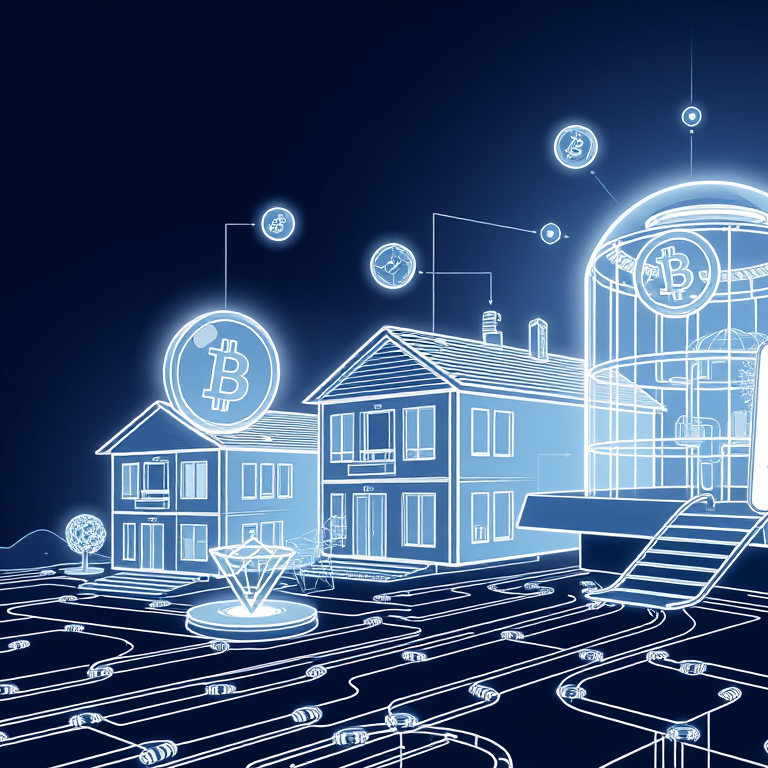
Introduction: The Engineering Behind Tokenised Rent
The promise of r3nt isn’t just a vision of more accessible rentals — it’s powered by robust engineering. Beneath the clean interface of the Farcaster Mini App lies a carefully designed architecture of smart contracts, token standards, and security patterns that make tokenised rentals possible. For developers, blockchain enthusiasts, and tech-savvy readers, understanding the backend reveals how real estate tokenisation can operate securely, efficiently, and at scale.
This article dives into the technical foundations of r3nt, explaining how Solidity contracts, ERC-1155 tokens, escrow mechanisms, and upgradeable frameworks all combine to bring transparency and automation to global rental markets.
The Smart Contract Suite
At the heart of r3nt lies a suite of smart contracts, each with a defined responsibility. This modular approach ensures scalability, maintainability, and security.
1. Listing Contract
- Manages creation of rental listings.
- Records details such as landlord address, rent amount, security deposit, and lease duration.
- Associates each listing with metadata (URI) containing property descriptions, images, and location data.
- Ensures that only valid listings (signed by landlords or their agents) are published.
2. Booking Contract
- Handles tenant bookings against a listing.
- Locks deposits in escrow until the booking is confirmed or completed.
- Enforces rules for cancellations, early exits, or defaults.
3. Escrow Vault
- A dedicated contract for holding tenant deposits and prepaid rent.
- Guarantees that neither landlord nor tenant can unilaterally seize funds.
- Supports programmable release of funds according to milestones (e.g., monthly rent cycles).
4. SQMU-R Token Contract (ERC-1155)
- Issues SQMU-R tokens representing fractional stakes in rental agreements.
- Uses ERC-1155 because it allows multiple token IDs within one contract:
- Each token ID corresponds to a specific rental agreement.
- Governance tokens (ID 0) and property tokens share the same framework.
- Investors holding SQMU-R tokens automatically gain rights to rental income streams.
5. Distribution Manager
- Collects rent payments from tenants.
- Distributes pro-rata shares to token holders.
- Automates investor yields without human intervention.
Technical Patterns for Security and Flexibility
Escrow of Deposits
Escrow is crucial in rentals, where disputes over deposits are common. In r3nt:
- Deposits are held in a smart contract.
- Release is automated based on lease completion or triggered by dispute resolution logic.
- Both landlords and tenants benefit from neutral, trustless fund management.
UUPS Upgradeable Pattern
Real estate laws and tokenisation standards evolve. r3nt uses UUPS (Universal Upgradeable Proxy Standard) proxies:
- Contracts can be upgraded without breaking deployed addresses.
- Reduces risk of obsolescence while preserving immutability of historical data.
- Governance ensures upgrades pass community or DAO approval before deployment.
ERC-1155 Advantages
Why ERC-1155 instead of ERC-20 or ERC-721?
- Supports fungible tokens (rental income streams) and non-fungible tokens (unique listings) under one roof.
- Lower gas costs when minting or transferring batches of tokens.
- Cleaner integration with marketplaces and DeFi tools.
Integration with Farcaster Mini Apps
The Farcaster integration makes r3nt more than just smart contracts — it makes it usable.
- Identity: A Farcaster account doubles as wallet and social identity.
- Discovery: Listings are shared as casts (posts) with embedded “Open in r3nt” buttons.
- UX Layer: The Mini App provides a mobile-first interface where blockchain complexity is hidden.
- Transaction Flow: When a tenant clicks “Book,” the Mini App triggers the booking contract while keeping the process seamless inside Farcaster.
This integration solves one of crypto’s biggest adoption challenges: onboarding. No MetaMask, no browser extensions — just social media and renting, rolled into one.
Example Transaction Flows
Tenant Booking Flow
- Tenant clicks Book Now in Farcaster.
- Mini App calls the Booking Contract.
- Tenant’s payment is transferred in USDC.
- Escrow Vault locks the deposit.
- Landlord and tenant both receive on-chain confirmation.
Tokenised Rental Flow
- Landlord chooses to tokenise a lease.
- Distribution Manager mints SQMU-R tokens tied to that contract.
- Investors purchase tokens, providing upfront capital.
- Tenant pays rent monthly.
- Distribution Manager splits payments among token holders.
Security Considerations
r3nt’s architecture integrates multiple layers of protection:
- Smart Contract Audits: Code is reviewed for vulnerabilities like reentrancy or overflow.
- Access Control: Only authorised roles (landlord, tenant, investors) can trigger certain functions.
- Fail-Safe Functions: In case of disputes, contracts allow arbitration or timelocked releases.
- Upgrade Safeguards: UUPS upgrades require governance approval, preventing unilateral code changes.
Why Developers Should Care
For blockchain developers and enthusiasts, r3nt is a case study in:
- Applying ERC-1155 beyond gaming into real-world finance.
- Using escrow contracts to solve real legal and financial frictions.
- Blending Farcaster Mini Apps with Solidity smart contracts for seamless UX.
Developers can also build on top of r3nt:
- Analytics dashboards showing tokenised rent performance.
- Secondary marketplaces for SQMU-R tokens.
- Integration with DeFi platforms for lending against rental income streams.
Broader Impact
By proving that smart contracts can manage rentals, r3nt positions itself as more than a product — it’s a blueprint for tokenised real estate globally. The combination of transparency, automation, and security transforms the most common financial relationship — paying rent — into a digital-native experience.
Conclusion: Engineering Trust in Rentals
The strength of r3nt lies not just in its vision but in its engineering. With a modular contract suite, ERC-1155 tokenisation, escrow-based protections, and seamless Farcaster integration, r3nt demonstrates how blockchain can handle one of humanity’s oldest transactions — renting a home.
For developers, the lesson is clear: tokenisation isn’t just theory. With the right architecture, smart contracts, Solidity, and DeFi principles can bring real estate online in a way that is practical, secure, and globally scalable.
r3nt is proof that behind every simple rental app, there’s powerful code ensuring trust, fairness, and innovation.

Leave a Reply